

The signals that a growing company needs finance leadership — and how to recognise them.
Most startups begin the same way, financially.
A part-time bookkeeper — or a service — keeps the transactions clean. A spreadsheet the founder maintains serves, in practice, as the financial model of the business. And an accountant in the background, appearing once a year for the filings.
At seed stage, it is the right setup.
The business is small enough that the founder holds the entire picture in their head. Decisions are made fast and reversed fast. Anything more elaborate would take money away from the product — which, at this stage, is the only thing that matters. A bookkeeper and a spreadsheet is a rational answer to the problem the business actually has.

The difficulty is that this setup does not fail loudly. It does not collapse. It does not send a signal. It quietly becomes insufficient — usually at the precise moment the stakes rise. And more often than not, the founder only realises it once they are already in the room where it matters.
So it is worth being specific about the points at which it breaks.
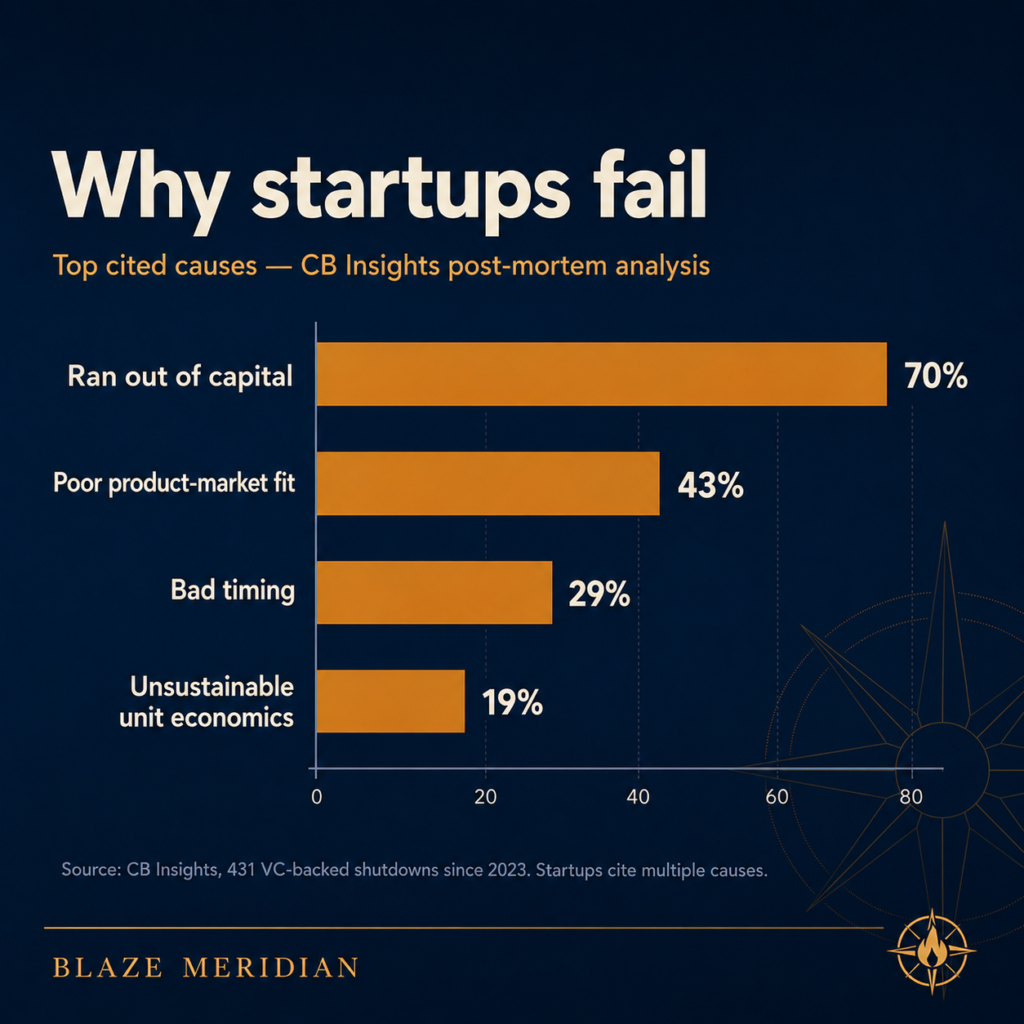
A Priced Round
A seed round is largely a bet on the founder and the idea. A priced round is a bet on the numbers — and the numbers get examined.
A bookkeeper reconciles what happened. An investor at Series A is asking what is going to happen, and why anyone should believe it. Those are different jobs.
A forecast built by someone who has never had to defend a forecast, rarely survives the second meeting. Not because the business is weak. Because the model has no stress-testing behind it, the assumptions are not visible, and the founder cannot explain why the numbers move the way they do when a variable changes.
Historical data matters too — and it matters more than most founders expect.
Clean, consistent, explicable data is the foundation the forecast rests on. If the last eighteen months of numbers have been re-categorised twice and the revenue definition has quietly shifted, that becomes the conversation. Instead of the business.
New Market Entry
The first market is simple. One currency, one bank, one set of rules.
The second market introduces problems the old setup was never built for. Revenue arrives in a currency the costs are not in. Cash sits in a jurisdiction it cannot easily leave. The entity structure — chosen quickly at incorporation — turns out to have consequences. Someone has to decide how the business reports all this — at what rate, on what basis, consolidated how.

A bookkeeper can record these transactions accurately. What they cannot do is flag that the margin is being eaten by currency movement rather than pricing, because that requires someone with a different skill-set to be looking for it.
License Preparation
For fintechs, this is often the sharpest inflection point — and the most underestimated.
A licence application is not purely a legal exercise. Regulators examine capital adequacy, governance, controls and the credibility of the business plan. In the UAE, for example, capital requirements under the Central Bank’s retail payment services regime scale with transaction volume — crossing a monthly average threshold for three consecutive months moves a firm into a higher capital tier automatically, and adding cross-border capability changes the licence category and the capital requirement with it.
The implication is easy to miss. The capital a firm is required to hold depends on volumes not yet achieved. Which means licence readiness is a question the forecast has to answer. If the model cannot confirm when that threshold will be crossed, the answer will be discovered at the worst possible moment — after it has already been crossed.
Governance continues to be assessed – past the application stage and for as long as a license is held, which requires a finance function that operates on an ongoing basis to support the business.
Investor Reporting
Before the raise, the founder decides what the numbers mean. After it, there is a board, a reporting cadence, and an expectation that the same data and MI arrives the same way every month.
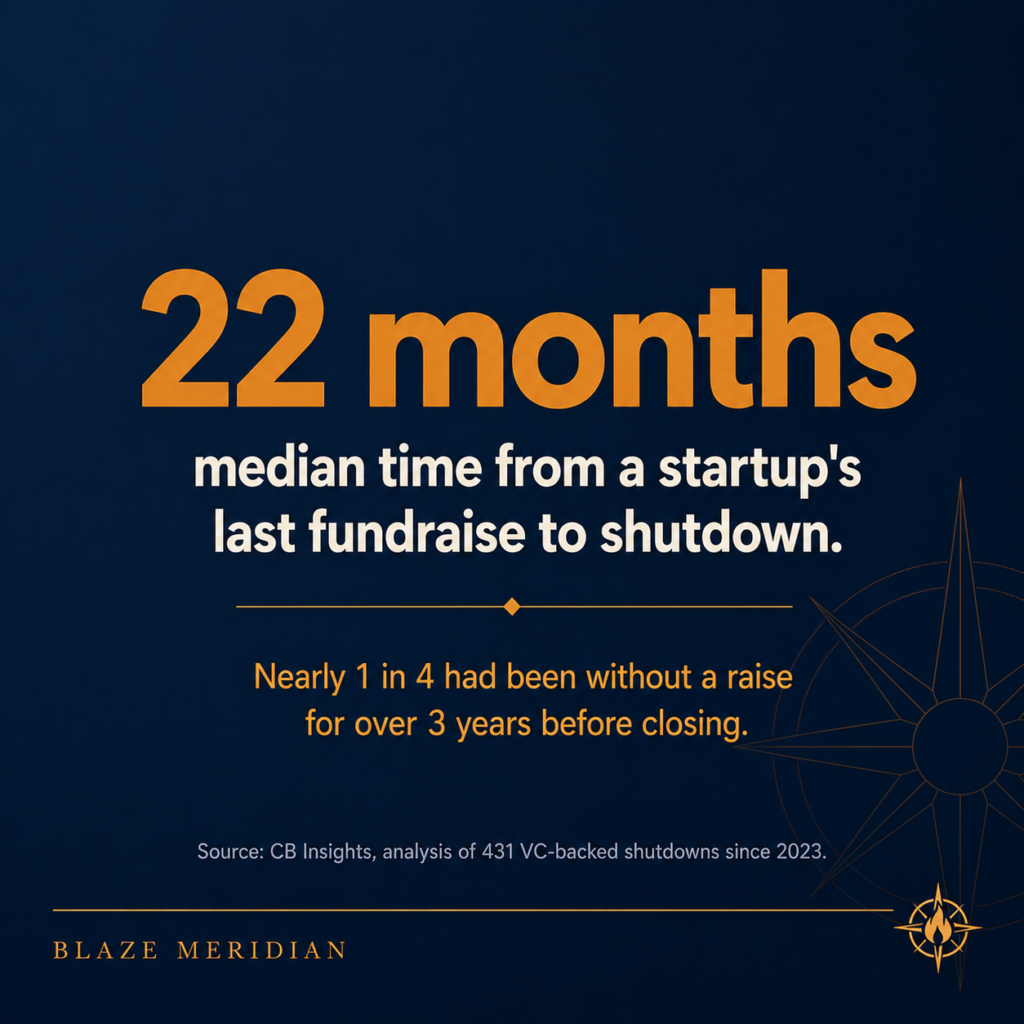
This sounds administrative. It is not. Reporting discipline is how a board forms its view of management — steadily, over time, before any meeting. The founder who restates a number, or presents a data point one way in March and another way in June, spends the next several quarters rebuilding confidence they did not realise they had lost. Not because the underlying business changed, but because the board noticed the inconsistency.
Banking Relationships
Two banks in two countries is not double the work. It is a completely different set of work.
Cash is now in more than one place, under more than one set of rules, with more than one counterparty relationship to maintain. Someone has to know where the money actually is, what can be moved and how quickly, and what happens if one of those relationships is disrupted. Banks in this region form a view of the companies they serve, and that view is shaped by who they deal with and how prepared that person is.
That is treasury – not the bookkeeper.
The Distinction
The pattern under all five signals is repeated.
The job of a bookkeeper is to look at past performance and report, accurately, what happened. It is essential work.
Finance leadership looks forward. The job is to say what is likely to happen, what the implications will be and what action may be required — and then to defend that view to an investor, a board or a regulator who will stress test the assumptions.
That forward-looking judgment is what a Virtual Finance Officer provides: senior finance leadership on a fractional basis — forecasting, fundraising support, controls, board and investor reporting, treasury and banking relationships — for companies that need the judgment before they can afford the full-time seat.
It is the very function a company needs at the point where the founder’s spreadsheet has become load-bearing.
Self-Check
Four questions – these are more useful answered honestly, rather than quickly.
1. If an investor asked today why the forecast assumes what it assumes, could it be defended by the Founder — or would they have to go back and check?
2. Does the Founder know, from their own model, when the volumes will cross the next regulatory or capital threshold?
3. Has the business reviewed, restated or redefined a metric in the last two quarters?
4. If all the finance information disappeared suddenly, is there anyone other than the Founder who could reconstruct the picture?
If more than one of these questions gives pause, the setup that worked so far is not the setup that moves the business forward.
It is simply the point most companies reach — and the ones that handle it well are the ones that planned for it.
Blaze Meridian’s Virtual Finance Office provides fractional finance leadership to startups and scale-ups across the GCC, India and Africa.
Reference:
Image 1 Source: https://www.cbinsights.com/research/report/startup-failure-reasons-top/
Image 2 Source: https://s3.amazonaws.com/startupcompass-public/StartupGenomeReport2_Why_Startups_Fail_v2.pdf
Image 3 Source: https://www.cbinsights.com/research/report/startup-failure-reasons-top/